News

CSA Farm Fair at Monadnock Food Co-op

By Monadnock Food Co-op

Considering investing in a CSA farm share this growing season?

Stop by the Monadnock Food Co-op’s Cafe on Sunday, March 26 from 2-4pm for the 2017 Monadnock Region CSA Fair to learn about the range of options from different farms in the Monadnock Region. Chat with the farmers from Hillside Springs Farm, Picadilly Farm, Mad Radish Farm, Sun Moon Farm, Farmer John’s Plot, New Dawn Farm and Tracie’s Community Farm about what options they have available for this season and find the farm share that fits your needs and preferences.
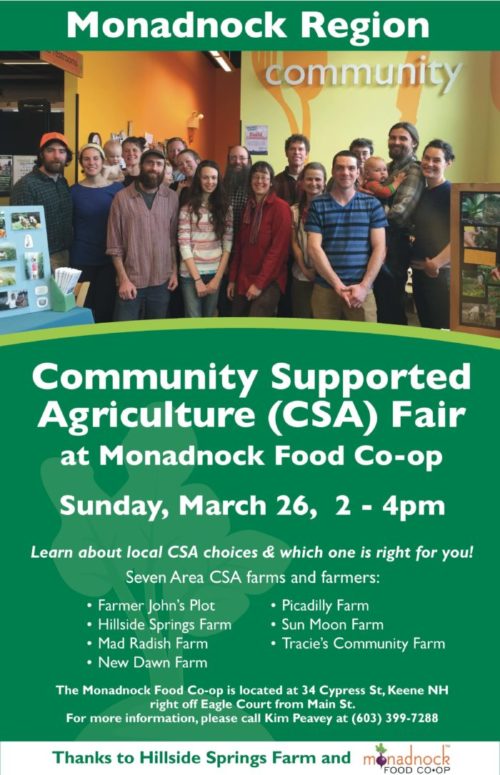
CSA-Fair-2017-11x17-FINAL-copy-e1488224795519

Although each local CSA farm is unique and individually run, each offers “shares” of locally grown food to community members. There are variations in the price, share size, distribution, choices, pick-up sites, payment plans and variety of food offered. Some CSA farms concentrate on vegetable production, while others offer eggs, meat, flowers, berries, maple syrup, honey, raw milk, cheese, yogurt, or other local products.

The commitment from community members to join a CSA implies a willingness to share with the farmer in both the rewards and risks of small-scale farming. Weather, pest damage, and crop failures affect both the farmer and the shareholder; allowing the community to share in the costs of raising food in sustainable ways. The shareholders know when, where, and how their food is grown, and are assured of high-quality and nutritious produce.

A CSA membership supports local farms and the local economy, eliminating the environmental impacts and costs associated with marketing, packaging, and shipping food long distances. Freshly picked, locally grown fruits and vegetables are an excellent value because they have superior flavor and more vitamins and minerals than many large-scale commercially raised crops. Sustainable farm practices also avoid the hidden costs of pesticide residues, soil erosion, and polluted surface ground water which are often associated with large scale conventional agriculture.

Local farmland in CSA use often becomes healthier through crop rotation, composting, cover crops, natural fertilizers, and periodic resting. In addition, small farms often grow heirloom or little-known varieties of fruits and vegetables, which helps maintain the diversity and vitality of the world’s seed bank.

CSA farms benefit our communities in so many ways, why not sign up for one today?!
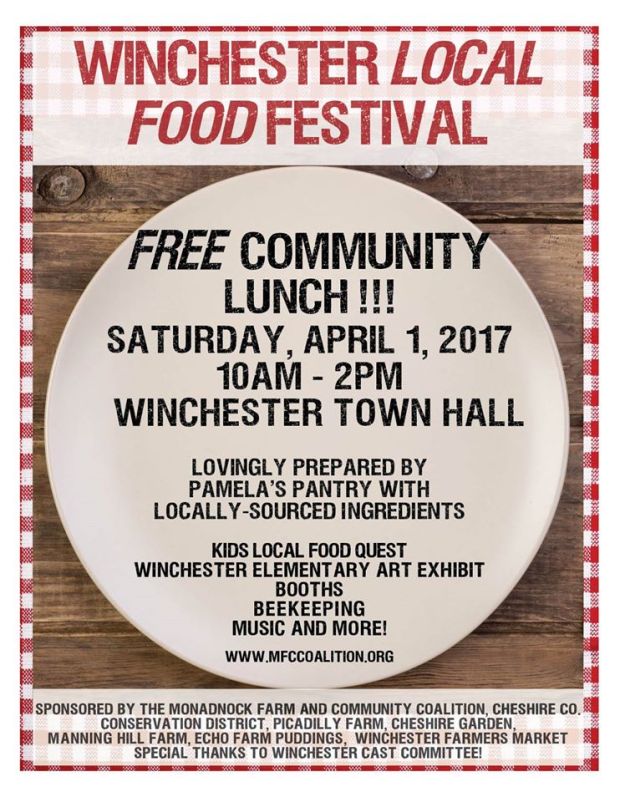
Winchester Local Food Celebration

winchester-local-foodJoin Monadnock Farm & Community Coalition for a FREE COMMUNITY LUNCH celebrating Winchester’s local farms and farmers working to provide the best, freshest, healthiest and accessible food to all its residents.


MENU

  • 3 Different Mac N’ Cheese dishes
  • Salad, Bread, Pies, Pastries & more!
  • Pamela’s Pantry will be put together a smorgasbord of delicious food sourced from Wingate Farm, Winchester Farmers Market, Picadilly Farm, Echo Farm, Manning Hill Farm, Cheshire Gardens and other local businesses.


ACTIVITIES

  • Kids Local Food Quest
  • Winchester Elementary Art Exhibit of Local Food
  • Music
  • Booths
  • Beekeeping Exhibition & more

Sponsored by the Education Working Group of the Monadnock Farm and Community Coalition, Cheshire Co. Conservation District, Picadilly Farm, Winchester Farmers Market, UNH Cooperative Extension Nutrition Connections, Winchester CAST committee and The Community Kitchen.

Made possible by a grant of the HNH Foundation.

Registration Open: Future of Farming Conference

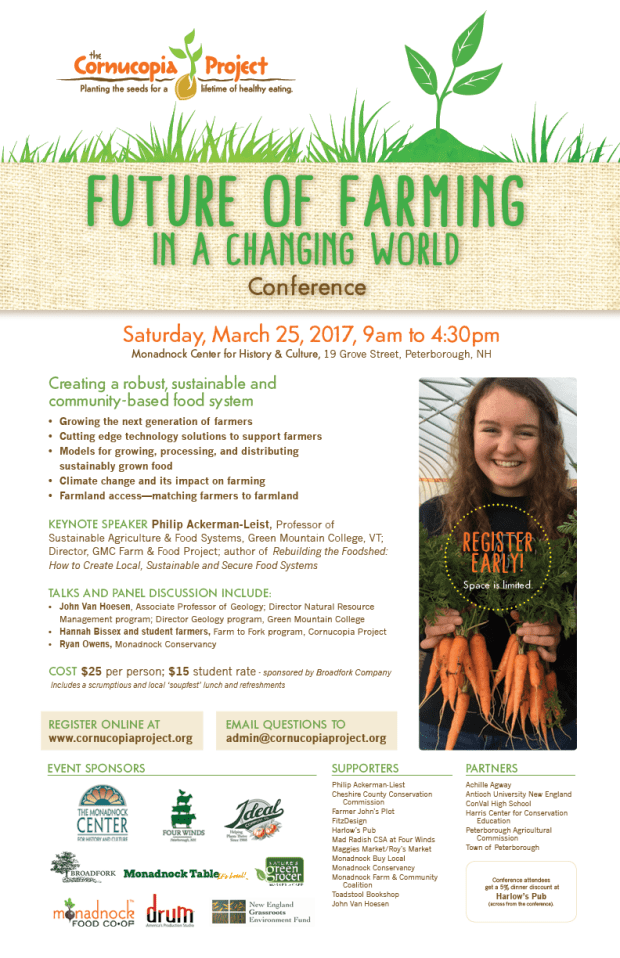
cornucopia-farming-conference-poster11x19-2017Future of Farming in a Changing World Conference

Creating a Robust, Sustainable & Community Based Food System
March 25, 2017, 9 to 4:30
Monadnock Center for History and Culture
19 Grove Street, Peterborough, NH

  • Growing the next generation of farmers
  • Cutting edge technology solutions to support farmers
  • Models for growing, processing, and distributing sustainably grown food
  • Climate change and its impact on farming
  • Farmland access-matching farmers to farmland

Keynote speaker:  Philip Ackerman-Leist, Professor of Sustainable Agriculture & Food Systems, Green Mountain College, VT; farmer, and author of Rebuilding the Foodshed: How to Create Local, Sustainable & Secure Food Systems.
Talks and panel discussion include:

  • John VanHoesen, Associate Professor of Geology; Director Natural Resource Management, Director Geology program, Green Mountain College, VT
  • Hannah Bissex and students, Farm to Fork program, Cornucopia Project
  • Ryan Owens, Monadnock Conservancy

Check in: 8 to 8:45am; program begins at 9am (pre-registration suggested as there are only 100 seats)

Registration: $25/per person, register here; $15/student rate, register here.  Student rate sponsored by Broadfork Company.  Please register early, as seats are limited.

Lunch: Light/local ‘Soupfest’ lunch included.  Will offer vegan, dairy-free and vegetarian options.

Post-conference dinner option: Visit our friends at Harlow’s Pub (across from the conference) and receive a 5% discount on your meal.

Let us know if you would like information on supporting this event by contacting Joyce at admin@cornucopiaproject.org.


Save