Early Sprouts Program: Focus on Young Children

My son went from being excited about dinosaurs to being excited about squash … we have eight varieties in our home right now. - Parent

Case Study 2

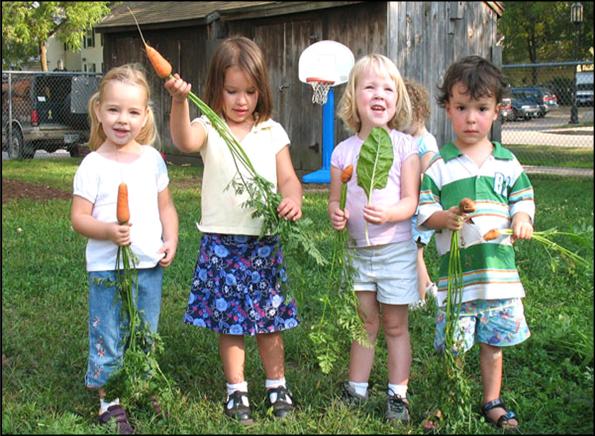
The Early Sprouts Program promotes learning among teachers, preschool-age children and their families using a “seed to table” approach.  Specifically, this program is a research-based nutrition and gardening curriculum that gives children experience in planting, harvesting and preparing their own food.  Holistically, however, it is a community-based model for creating positive change.
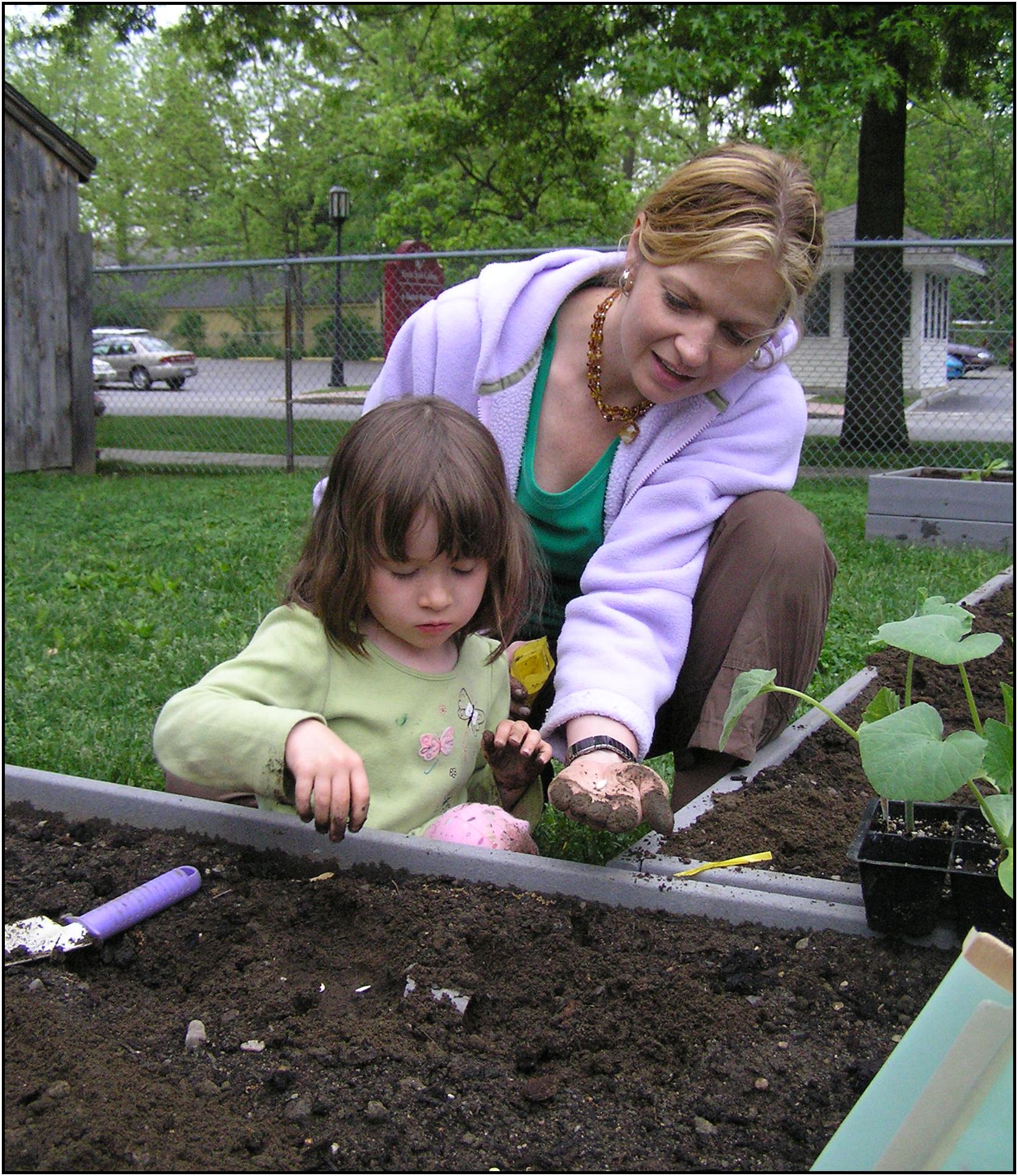
Dr. Karrie Kalich, a registered dietitian and an associate professor at Keene State College (KSC), is the Primary Investigator for the Early Sprouts program. She led the development of this 24-week preschool curriculum and helped write the book, Early Sprouts: Gardening and Nutrition Experiences for the Young Child, used in local child care centers such as the Keene State College Child Development Center (CDC) and five afterschool programs.

The Early Sprouts Program uses raised organic garden beds, sensory experiences, and cooking lessons focused on six target vegetables to:

  • Increase young children’s food preferences for and consumption of fruits, vegetables, whole grains and low fat dairy products.
  • Promote school and family-based dietary changes.
  • Reduce the risks and issues associated with childhood overweight and obesity.

Project Beginnings

The seeds for Early Sprouts were nourished as Karrie worked at Linden Tree Farm & CSA during graduate school.  Her past connections and passion for local food and her interest in promoting behavior change contributed to the program’s development, as did collaborations with KSC students; faculty from the KSC nutrition and education departments; and the Head Start Centers of Southwestern Community Services.

Karrie’s vision came to life thanks to a Home Depot Youth Gardening Grant to build raised bed gardens at the KSC CDC.  Initial funding also came from the MacMillan Company in Keene.

In the Spring of 2006, the Early Sprouts program flourished into eight raised garden beds on the CDC’s playground.

Up and Running

Early Sprouts is now used in many preschools and spans the school year.  Training and support for classroom teachers and family outreach is a component of the program.

In the 2008-09 school year, six Head Start Centers in New Hampshire as well as the Children’s Learning Center at Dartmouth-Hitchcock Keene, Lily Garden Learning Center and the University of New Hampshire Child Study and Development Center used the Early Sprouts program.

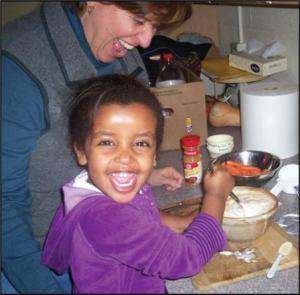
At the start of each week, a vegetable is explored using all the children’s senses. The students prepare a recipe together using the week’s vegetable and at the end of the week, take home a recipe kit to reinforce their learning with their family.

“We send home family recipe kits to extend the experience into the home.  The kits include all of the ingredients needed to prepare the recipe,” Kalich shared.

Families are kept engaged not only through the family recipe kits but with regular newsletter articles from Early Sprouts.  Families are also invited to join their children in planting the garden, participating in class activities, and attending special events such as the “stone soup” luncheon and the butternut squash pancake breakfast.

Initially, Karrie’s favorite part of the program was gardening with the kids. Now that joy has expanded to presenting with classroom teachers at regional, national and international conferences where they have the opportunity to share their Early Sprouts experience and educate their peers.
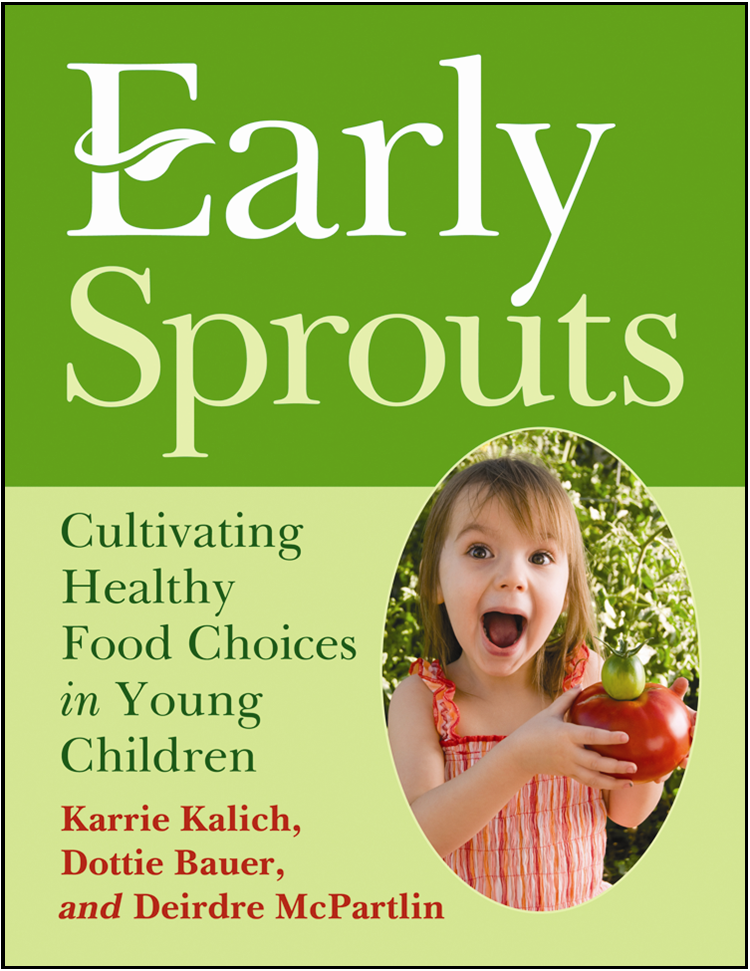
The Early Sprouts Program is now recognized nationwide as a model community program.  In 2008, the program received the Surgeon General’s “Healthy Youth for a Healthy Future” Champion Award. The Champion Award highlights prevention programs that form partnerships and help kids stay active, adopt healthy eating habits, and promote healthy choices.  In 2009, Kalich was presented with the “Mary Abbott Hess Award for an Innovative Food & Culinary Effort” from the American Dietetic Association.

Hurdles to Overcome

One of the unexpected challenges that Early Sprouts teachers met were school fire codes—cooking was not allowed in some of the classrooms.  For a curriculum that includes cooking in the classroom this is a major hurdle to work through before the program is implemented.

Planning for the Future

The Early Sprouts program is dynamic and continually evolves thanks to teacher feedback. It is expanding beyond the school day to after-school programs in Troy, Gilsum, Winchester, Hinsdale and Westminster, VT  to work with elementary school-aged children.  This is a partnership between Keene State College and the after-school programs and is implemented with current after-school funding.  AmeriCorps Health & Wellness VISTA Members are an integral part of this partnership.

To date, Early Sprouts has offered four trainings at local after-school programs.  After-school programs are proving to be an ideal fit for Early Sprouts—as after-school programs are looking for wellness-based best practice initiatives.  They also have the time to devote to this type of program.

Kalich is hoping to incorporate more cultural diversity into the curriculum and work more with UNH Cooperative Extension. Another important goal is finding a “real” gardener to join the Early Sprouts team.

Advice for Other Schools/Projects

Kalich shares: Have a plan with how to deal with division of roles, training, and maintaining the raised beds.
“It’s easier to teach a behavior than to change one …” — Dr. Susan Lynch Pediatrician and N.H.’s First Lady

The Cornucopia Project: Growing With Kids

Case Study 1

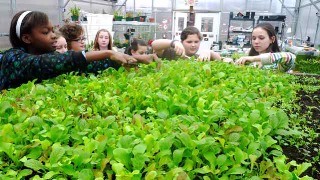
Kin Schilling, Founder and Director of The Cornucopia Project shares an upcoming goal, capturing the spirit of the project: “The kids are cutting salad greens for the cafeteria in December.  They will cut it, wash it and take a large bowl from the greenhouse directly to the cafeteria and continue the process three to four more times, planting every two weeks.  The students also plant spinach and arugula.”

The Cornucopia Project (CP) serves young people throughout the Monadnock Region and believes kids best understand where their food comes from by growing, harvesting and eating it.  “We think that it’s important that kids eat their vegetables… and grow them, too!” Kin adds.

CP is both a school- and garden-based program with a mission to “teach sustainable and nourishing life practices to children and young adults by connecting them to the land and community through organic gardening and nutrition.”

The Cornucopia Project’s goals are to:

  • Cultivate food, learning and community through the development of school gardening programs
  • Create a safe local food system
  • Eat locally and sustainably
  • Cook together
  • Build curriculum around growing local food
  • Plant, harvest and eat organic food in our schools
  • Support local farms

Project Beginnings

Blending her background as an organic gardener, artist and professional cook with a heart of gold, Kin started the CP in 2006 with thirteen raised beds and a chicken coop on a one-acre piece of land near her home in Hancock.

Kin’s first pilot project called Earth Connection brought together students from the Crotched Mountain School, a school for young people who are physically or mentally challenged, and Great Brook Middle School in Antrim in 2006.  They hammered together sixteen wheelchair-accessible raised beds where they grew herbs and vegetables.  From the garden, the students took the food to the main cafeteria.

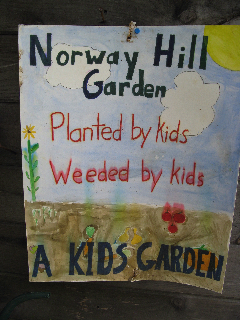
In 2008, the Norway Hill Kids’ Garden began and a Kids Garden Club ran in the spring, summer and fall. Kids met once a week for six weeks, divided into two age groups: the Seedlings, ages 3-6, and the Garden Gorillas, ages 6-10.

The Garden Gorillas planted, hoed, weeded, watered, and played games, listened to stories, drew pictures and sang. They even put together a farmers’ market for their families.

The Seedlings, the younger-aged gardening club, introduced young children to plants, vegetables and how seeds grew. The Seedlings learned about a new garden plant every week.

Up and Running

In 2009, the Cornucopia Project was in five schools: Dublin, South Meadow, Conval, Crotched Mountain and Hancock Elementary.

Hancock Elementary School integrated their work with CP into the curriculum. Each grade level, kindergarten through fourth grade, participated in weekly garden activities at the Norway Hill Kids Garden and in the classroom. Past activities included digging an asparagus bed, learning about and drawing animals that are harmful to a garden, reading books about gardening such as Hogwood Steps Out written by Hancock resident Howard Mansfield, observing and recording differences in home-made and store-bought compost, as well as planting, watering, weeding, and journaling.

The Dublin Consolidated School planted crops and each class cooked something with what they grew in the fall. Best of all, all 68 students tried what was cooked—even if just a tiny amount that Kin calls a “no thank you” bite.  Different families “adopted” the garden for a week over the summer.

At Crotched Mountain School a class of mostly autistic children planted an herb and vegetable garden which children visit, one-by-one, to water.  The Home Economics and Science department partnered with CP to help  students learn about plants, conservation, and nutrition.

Students at the South Meadow School have built nine new raised beds in a sunburst pattern—with a community bread oven nestled right in the center.  A greenhouse will produce much of the salad mix for the cafeteria.  Sixty-three students participate in the garden club, meeting at 7:20 a.m. every Tuesday and Thursday in the greenhouse.  The Peterborough Garden Club will help maintain the beds throughout the summer. See more details in the South Meadow School Toolkit pages.

Hurdles to Overcome

Students build sustainable compost bins at a garden site. They cut down eighteen saplings, stagger the saplings and lash the corners to four posts using twine. At the end of the growing season the saplings are used for firewood in the bread oven and the compost pile continues to decompose.

Funding, like with many other programs, is a challenge.  Kin volunteers her time for most of the schools she works with.  Individuals and organizations like Slow Food Monadnock donate resources, time and money and CP finds many creative ways to fundraise: Rosaly’s Garden Cookbook (in its fourth printing) and Life Is Food t-shirts.

Kin would love to acquire the funds to hire an assistant and find a grant writer.  This past summer, the Guerilla Gardeners were unable to use the Norway Hill Garden property due to zoning issues.

Planning for the Future

The Cornucopia Project was recently given 52 acres to start a community-based Agricultural Education Center in Hancock. The gift or permanent lease was donated by the Mathewson family. The property is called Brookside Farm and has been in existence since 1790. With the help of Bob Bernstein from Land For Good, a non-profit organization located in Keene, the Mathewson family and the Cornucopia Project will form a land trust.

The goal over the next five years is to develop solid plans to gently teach sustainability, land stewardship and nourishing life practices to local children, young adults and kids at risk. CP will slowly build upon the existing infrastructure of organic raised garden beds and a Zen garden. Kin is already planning to bring at-risk kids from New York City to help build garden beds and yurts.  She also envisions a classroom and kitchen on the property and has plans to acquire farm animals, teach maple sugaring, conduct woodland walks and partner with a local mill in Hancock to teach about wood milling. Local schools will be invited to participate in all the activities.

At Conval High School, the plan is to create a school-based agri-business program.  The Green Team, along with two teachers and community members, will build a 20 x 60 foot hoophouse.  Students will manage the growing and processing of organic foods and sell their products to the cafeteria and area grocery stores such as Roy’s and Nature’s Green Grocers. Kin wants students to keep at least 60% of the profit.  A mission statement and business plan are started.  Kin hopes to build a commercial kitchen for the school, students with their parents and area farmers to use.

Advice for Other Schools/Projects

Kin advises schools, farmers and gardeners to just do it – if you have an idea in your head that seems too big, start small.  It’s easier to build on success.

Instead of relying on a rotatiller or tractor, new beds can be established using cardboard and newspaper (sheet mulching).

Kin urges all of us to come together in strength; the kids are our future and they need to be educated in a way that excites them—which the Cornucopia Project clearly does.

FOR UPDATES: Read Growing Organic Gardeners

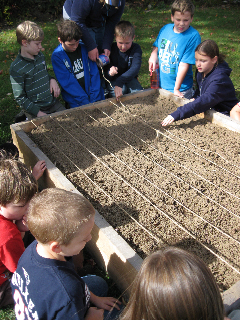
Students at Dublin use their math skills to calculate how many cubic feet of soil they needed to fill each bed and how many garlic cloves can be planted.


Case Studies of Monadnock Region’s School Farm & Garden Programs

The Farm & Garden Education Toolkit is grounded in ten case studies of school and community programs – linking young people and local food.

We know there are more of you out there – inspiring, caring and committed people cultivating connections to the soil and our food. Who should be the next case study?

2009 Case Studies:

The Cornucopia Project

Early Sprouts

Garden Meals

Hooper Institute

The Orchard School

South Meadow School

Stonewall Farm

Symonds School

Winchester School

Antioch University New England