Kin Schilling, Founder and Director of The Cornucopia Project shares an upcoming goal, capturing the spirit of the project: “The kids are cutting salad greens for the cafeteria in December. They will cut it, wash it and take a large bowl from the greenhouse directly to the cafeteria and continue the process three to four more times, planting every two weeks. The students also plant spinach and arugula.”
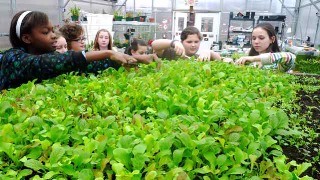 The Cornucopia Project (CP) serves young people throughout the Monadnock Region and believes kids best understand where their food comes from by growing, harvesting and eating it. “We think that it’s important that kids eat their vegetables… and grow them, too!” Kin adds.
CP is both a school- and garden-based program with a mission to “teach sustainable and nourishing life practices to children and young adults by connecting them to the land and community through organic gardening and nutrition.”
The Cornucopia Project’s goals are to:
- Cultivate food, learning and community through the development of school gardening programs
- Create a safe local food system
- Eat locally and sustainably
- Cook together
- Build curriculum around growing local food
- Plant, harvest and eat organic food in our schools
- Support local farms
Project Beginnings
Blending her background as an organic gardener, artist and professional cook with a heart of gold, Kin started the CP in 2006 with thirteen raised beds and a chicken coop on a one-acre piece of land near her home in Hancock.
Kin’s first pilot project called Earth Connection brought together students from the Crotched Mountain School, a school for young people who are physically or mentally challenged, and Great Brook Middle School in Antrim in 2006. They hammered together sixteen wheelchair-accessible raised beds where they grew herbs and vegetables. From the garden, the students took the food to the main cafeteria.
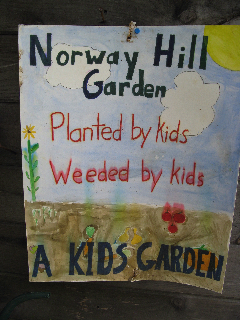 In 2008, the Norway Hill Kids’ Garden began and a Kids Garden Club ran in the spring, summer and fall. Kids met once a week for six weeks, divided into two age groups: the Seedlings, ages 3-6, and the Garden Gorillas, ages 6-10.
The Garden Gorillas planted, hoed, weeded, watered, and played games, listened to stories, drew pictures and sang. They even put together a farmers’ market for their families.
The Seedlings, the younger-aged gardening club, introduced young children to plants, vegetables and how seeds grew. The Seedlings learned about a new garden plant every week.
Up and Running
In 2009, the Cornucopia Project was in five schools: Dublin, South Meadow, Conval, Crotched Mountain and Hancock Elementary.
Hancock Elementary School integrated their work with CP into the curriculum. Each grade level, kindergarten through fourth grade, participated in weekly garden activities at the Norway Hill Kids Garden and in the classroom. Past activities included digging an asparagus bed, learning about and drawing animals that are harmful to a garden, reading books about gardening such as Hogwood Steps Out written by Hancock resident Howard Mansfield, observing and recording differences in home-made and store-bought compost, as well as planting, watering, weeding, and journaling.
The Dublin Consolidated School planted crops and each class cooked something with what they grew in the fall. Best of all, all 68 students tried what was cooked—even if just a tiny amount that Kin calls a “no thank you” bite. Different families “adopted” the garden for a week over the summer.
At Crotched Mountain School a class of mostly autistic children planted an herb and vegetable garden which children visit, one-by-one, to water. The Home Economics and Science department partnered with CP to help students learn about plants, conservation, and nutrition.
Students at the South Meadow School have built nine new raised beds in a sunburst pattern—with a community bread oven nestled right in the center. A greenhouse will produce much of the salad mix for the cafeteria. Sixty-three students participate in the garden club, meeting at 7:20 a.m. every Tuesday and Thursday in the greenhouse. The Peterborough Garden Club will help maintain the beds throughout the summer. See more details in the South Meadow School Toolkit pages.
Hurdles to Overcome

Funding, like with many other programs, is a challenge. Kin volunteers her time for most of the schools she works with. Individuals and organizations like Slow Food Monadnock donate resources, time and money and CP finds many creative ways to fundraise: Rosaly’s Garden Cookbook (in its fourth printing) and Life Is Food t-shirts.
Kin would love to acquire the funds to hire an assistant and find a grant writer. This past summer, the Guerilla Gardeners were unable to use the Norway Hill Garden property due to zoning issues.
Planning for the Future
The Cornucopia Project was recently given 52 acres to start a community-based Agricultural Education Center in Hancock. The gift or permanent lease was donated by the Mathewson family. The property is called Brookside Farm and has been in existence since 1790. With the help of Bob Bernstein from Land For Good, a non-profit organization located in Keene, the Mathewson family and the Cornucopia Project will form a land trust.
The goal over the next five years is to develop solid plans to gently teach sustainability, land stewardship and nourishing life practices to local children, young adults and kids at risk. CP will slowly build upon the existing infrastructure of organic raised garden beds and a Zen garden. Kin is already planning to bring at-risk kids from New York City to help build garden beds and yurts. She also envisions a classroom and kitchen on the property and has plans to acquire farm animals, teach maple sugaring, conduct woodland walks and partner with a local mill in Hancock to teach about wood milling. Local schools will be invited to participate in all the activities.
At Conval High School, the plan is to create a school-based agri-business program. The Green Team, along with two teachers and community members, will build a 20 x 60 foot hoophouse. Students will manage the growing and processing of organic foods and sell their products to the cafeteria and area grocery stores such as Roy’s and Nature’s Green Grocers. Kin wants students to keep at least 60% of the profit. A mission statement and business plan are started. Kin hopes to build a commercial kitchen for the school, students with their parents and area farmers to use.
Advice for Other Schools/Projects
Kin advises schools, farmers and gardeners to just do it – if you have an idea in your head that seems too big, start small. It’s easier to build on success.
Instead of relying on a rotatiller or tractor, new beds can be established using cardboard and newspaper (sheet mulching).
Kin urges all of us to come together in strength; the kids are our future and they need to be educated in a way that excites them—which the Cornucopia Project clearly does.
FOR UPDATES: Read Growing Organic Gardeners
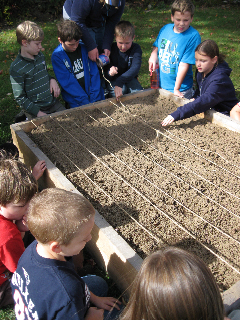

 Yarden of Eatin'