South Meadow School: The Dream Becomes Reality

Inside the Greenhouse at South Meadow School.

Case Study 6

“For some kids, coming to school is easy.  For others, school is a struggle. We want to have something that can reach them,” says South Meadow School Principal Dick Dunning. For one student at South Meadow Middle School in Peterborough, NH, coming to school was the last thing he wanted to do. But the day he got his own chicken, he said “This is the best day of my life!”

When Dick Dunning first arrived at South Meadow School, he already had a vision for how they could better use the school grounds as an educational space. From the very start he wanted to build a greenhouse on the school’s front lawn. His dream became reality in 2003, and in the following years the program blossomed into so much more.

In addition to the greenhouse, a multitude of other food and agriculture opportunities are now available on the school grounds of South Meadow Middle School. These include: vegetable gardens, a koi fish pond, bee hives, a chicken coop, an industrial composter, and herb gardens. All of these structures and programming are incorporated into not only the curriculum but also into the broader community. School administrators, teachers, and staff are constantly looking for new and different ways to utilize the infrastructure they have created to enhance food and farming both within the school and throughout the community.

Project Beginnings

A trellis for peas stands near South Meadow  School’s Greenhouse.From the very beginning, the goal of the food program at South Meadow School was to provide engaging hands-on learning opportunities for students. Dick’s desire to make this happen through food and agriculture came from his own background with 4-H, Boy Scouts, and other school outdoor/natural experiences he had growing up.

To buy the materials to build the greenhouse, the school raised $58,000 through in-kind donations and grant money from foundations and trusts. Dick Dunning and Bruce Dechert, Assistant Principal at the time, assembled the greenhouse themselves—a move that saved the school a total of $26,000.

After the greenhouse came outdoor garden beds, followed by bee hives in 2004, and both an industrial size “Earth Tub” composter and a chicken coop in 2007. Apart from the greenhouse, the “Earth Tub” was one of the greatest expenses thus far ($10,000) and these funds came from a grant through the Walker Fund of the New Hampshire Charitable Foundation.

Up and Running

During the summer months when school is out of session, South Meadow School partners with the Cornucopia Project’s summer camps to help maintain and enhance the school’s outdoor garden beds. The Friendly Farm in Dublin, also partners with the school  by providing a summer home for the school’s chickens.
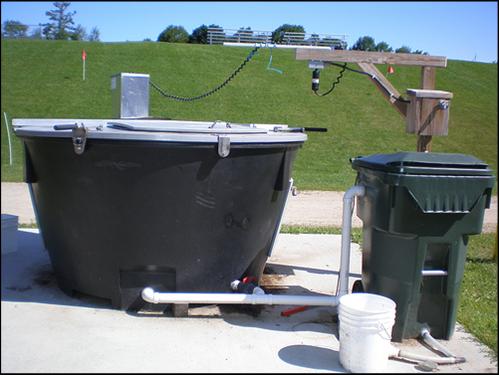
The EarthTub composter is where all food scraps from South Meadow School end up.

One of the daily tasks that students are a part of at school is to take classroom food waste and scraps out to the “Earth Tub” composter. Food service staff also contribute food waste from the cafeteria to this giant compost system that can hold hundreds of pounds of food material to create compost that is added to the gardens.

Teachers use the onsite facilities for various lessons and class projects throughout the year. Food and agriculture is also intentionally incorporated into classroom curriculum throughout a student’s time at South Meadow School, staring in 5th grade when students complete a biosphere activity.

To raise funds for the school’s new infrastructure, Dick Dunning thinks outside the box and uses the schools existing resources in new ways. One of his most successful fundraising events has been to invite the community to the school’s gymnasium for an evening of roller-skating.

Hurdles to Overcome

While South Meadow School was fortunate enough to have administrative support from the very beginning, there were still a number of challenges that had to be addressed to get the program where it is today.  Dick points out that building codes and other legalities must be dealt with before moving forward. Also, while South Meadow was fortunate enough to already have the support of their principal, Dick found that at times there was a lack of vision or initiative among staff.

Planning for the Future
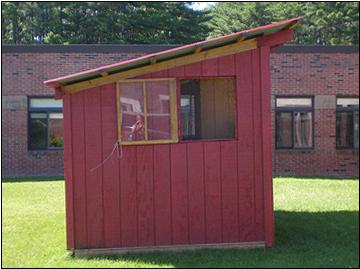
The South Meadow School chicken coop isn’t far from the indoor classrooms where students also spend time learning.

Dick Dunning is still dreaming about ways that the program can expand in the future. Some day, he envisions having an entire farm on-site at the school, with a barn and small animals where students can learn about and more deeply connect with food and agriculture. He also hopes that someday the school will be able to sell the koi they raise to local residents.

Beyond looking at improvements that they can make to the school facilities and programs, Dick is also interested in reaching out and making a deeper connection to the community. He wonders, “What other community needs can [South Meadow School] fill?”

Advice for Others

For other schools that are interested in starting similar food and agriculture programming, Dick Dunning offers the following advice:

  • Get administrative support before you begin.
  • Network and partner with local organizations and resources.
  • Involve students—they are the bottom line!
  • Don’t be afraid to take risks.
  • Get commitment from teachers. Identify their needs and help them meet their needs through the program.
  • Try to fill a niche within the community.
The Hooper Institute: Two Brothers – One Dedication

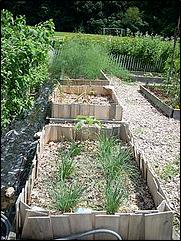
Raised beds at the North Walpole School.

Case Study 4

Asked what her favorite part of the program is, Eloise Clark—Director of the Hooper Institute, joyfully responded, “I am the director and I create all of this. I love to implement and organize programs. Seeing happy kids’ faces of course is always wonderful!”

The Hooper Institute graces the top of a beautiful hill with diverse terrain—a golf course across the street, a pond just down the hill, and behind the building a community garden on what was once a sheep pasture.  The building itself has a woodworking shop set up downstairs and the main room on the second floor is decorated with farm tools and historical accounts of farming and gardening in the region.

The community garden was full of bright green vegetation this growing season and it was evident that the beds are well maintained and in good hands.  The water collection system that pumps water from the pond down the hill certainly captures ones attention.  At the primary school, sunflowers were towering overhead, the cherry tomatoes were slowly ripening and the Japanese beetles had taken a liking to the bolting asparagus plants.  The smell of old wood wafted through the air, cultivating historical images of farming as the Institute comes alive. It truly is a unique site.

Project Beginnings

The Hooper brothers of Walpole, George and Frederick, were responsible for sowing the seeds of the Hooper Institute

Butterfly garden at the Walpole Primary School.

in the late 1920s. Their mission was to provide the town of Walpole, exclusively, with programs that focused on agriculture, forestry, botany, soils, and environmental conservation, providing historical background to the Connecticut River Valley, as well as the natural resources that sustain it. Essentially, they wanted to make connections between local agricultural history, the tools used, and the people who worked the land.

The building that houses the Institute was built in 1930, serving as Walpole’s Agricultural School. The agriculture vocation program was later moved to the high school in the 1960s.

David Blair, the Institute’s director in the 1970s and sole employee, started the community gardens behind the Institute, as well as in North Walpole. Both gardens were a big hit during the 1970s gas embargo, which nurtured a time of self-sufficiency. Eventually, by the 1990s the primary school also had a garden.

Presently, Eloise Clark is the Executive Director of the Institute (she started in 1977). Eloise splits her duties with Rebecca Whippie and both oversee the vitality of the community gardens and programs.

Up and Running

As Eloise elaborates, “The Hooper Institute is unique in and of itself. We go into the classroom to do lessons for a whole year, which is about 40 lessons per school year.”

This is the primary way the Institute serves the youth of Walpole at no charge. Funds donated by the Hooper brothers, as well as from ongoing donations, fully fund the programs.

Students learn a great deal about agriculture, wildlife, soils, and other aspects of environmental science through hands-on activities such as planting seeds, weeding, watering, mulching, and harvesting. The children begin to develop a reverence for plants and their life cycles, as well as the many birds, insects, and mammals that interact with the garden throughout the year.

The Institute also runs a summer work program and a variety of summer camp programs. High school students work on the farm of their choice in Walpole. In return, the students get paid through the Institute and acquire hands-on skills, while local farmers gain free labor.

The summer camp programs offer enriching experiences for youth of all ages. In 2008, more than ninety young people explored the grounds of the Hooper Institute, hiked and biked to spectacular natural areas, visited local farms, and tried their hands at woodworking in the Institute’s woodshop.

Hurdles to Overcome

The Institute is very fortunate to have the vision and financial backing of the Hooper brothers. However, they are currently drawing the maximum amount of funds from the trust. Fortunately, Eloise and Rebecca are creative  and are seeking grant opportunities elsewhere.  They always accept free-will donations to offset program costs.

Garden Meals: Learning to Eat Healthy, Right from the Garden

Case Study 3

A young boy squeals excitedly as he finds yet another potato beetle and begins to pull it from the plant where it resides. Nearby, some folks pick peas and other veggies. Eggs are gathered from Stacey’s chicken coop, just down the street. Indoors, participants begin chopping and preparing all the foods needed for a delicious garden meal. Today’s menu includes steamed kale, a fresh green salad, and an egg frittata stuffed with all of the garden goodies that were freshly picked just a few moments before. As everyone sits down at the picnic tables for lunch, excitement fills the air in anticipation of tasting these new and different foods, tempered by a healthy dose of childhood hesitation. Ultimately, everyone eats, laughs, and enjoys each other’s company over a fantastic, nutritious lunch that we all had a hand in creating.

Project Beginnings

Five years ago, Stacey Oshkello, a graduate of the Keene State College Dietetic Internship Program, was searching for an opportunity to do good work in her community that would utilize her knowledge and experience in food, gardening, and nutrition. At the same time, Cold Pond Community Land Trust (CPCLT) in Acworth, NH was looking for creative ways to serve as an educational resource for sustainable and regenerative agriculture. Thus began Garden Meals, a program of CPCLT that uses community resources to educate the wider community about garden stewardship and healthy eating.

Stacey was the force that got the program off the ground, drawing from her experience as an intern at Stonewall Farm in Keene and incorporating information she gained through the University of Vermont Cooperative Extension Program for Garden Education. However, none of her efforts would have been possible without the resources, infrastructure, and organizational status that CPCLT provides. Many CPCLT residents have been involved with the program over the years as garden managers, school program coordinators, or growers of food.

Up and Running

Over the past five years, CPCLT has formed many partnerships to keep the Garden Meals program moving forward. One such partnership is with the Alstead Area Community Trust, that has generously acted as a fiscal agent for the program when applying for grants. Monadnock Family Services has covered some of the cost for meals and education on a per-child basis. Other organizations that have given the program financial support are the NH Charitable Foundation, United Way, Claremont Savings Bank, and Integrative Service Network. This last organization, based in Claremont, works with developmentally disabled adults and they have really loved being a part of the program for the past four years. Without a doubt, Garden Meals would not have been possible without the land of CPCLT on which to grow and raise the food used in the Garden Meals program along with the dedication of residents who made this education program a priority.

Garden Meals also travels to and works with area schools to provide nutrition education programming. Some of the schools they currently work with are The Orchard School, Surry Village Charter School, Charlestown Elementary, Marlow Elementary and Acworth Elementary. Garden Meals has even started a vermicomposting project at Acworth Elementary, and this past fall they were able to harvest the garden and prepare food for the school’s annual Thanksgiving feast.

Hurdles to Overcome, Planning for the Future

Travel between schools and the program’s current site—CPCLT land that has been dedicated to growing food for Garden Meals—can sometimes present a problem for staff, but a solution is on the horizon. CPCLT will soon be building a community center, which will be the future home of Garden Meals.

Another challenge the program faces is that many of the current sources of funding used to keep the program up and running could be discontinued at any time. Garden Meals has yet to find a sustainable source of funding for this important work within the community.

Advice for Others

Stacey Oshkello’s advice for others interested in starting a similar initiative:

  • Involve farmers as much as possible.
  • Forge relationships with teachers and schools to give your program an outlet.

Early Sprouts Program: Focus on Young Children

My son went from being excited about dinosaurs to being excited about squash … we have eight varieties in our home right now. - Parent

Case Study 2

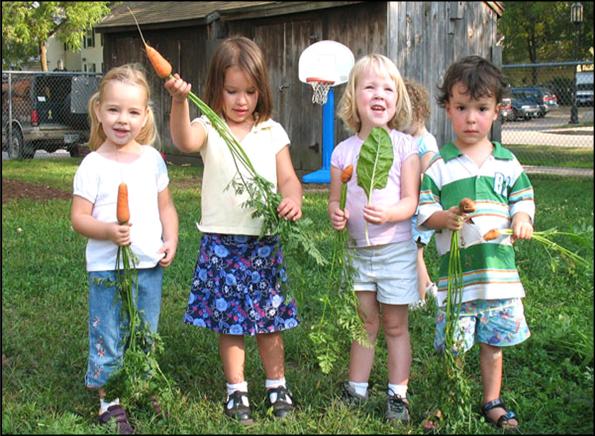
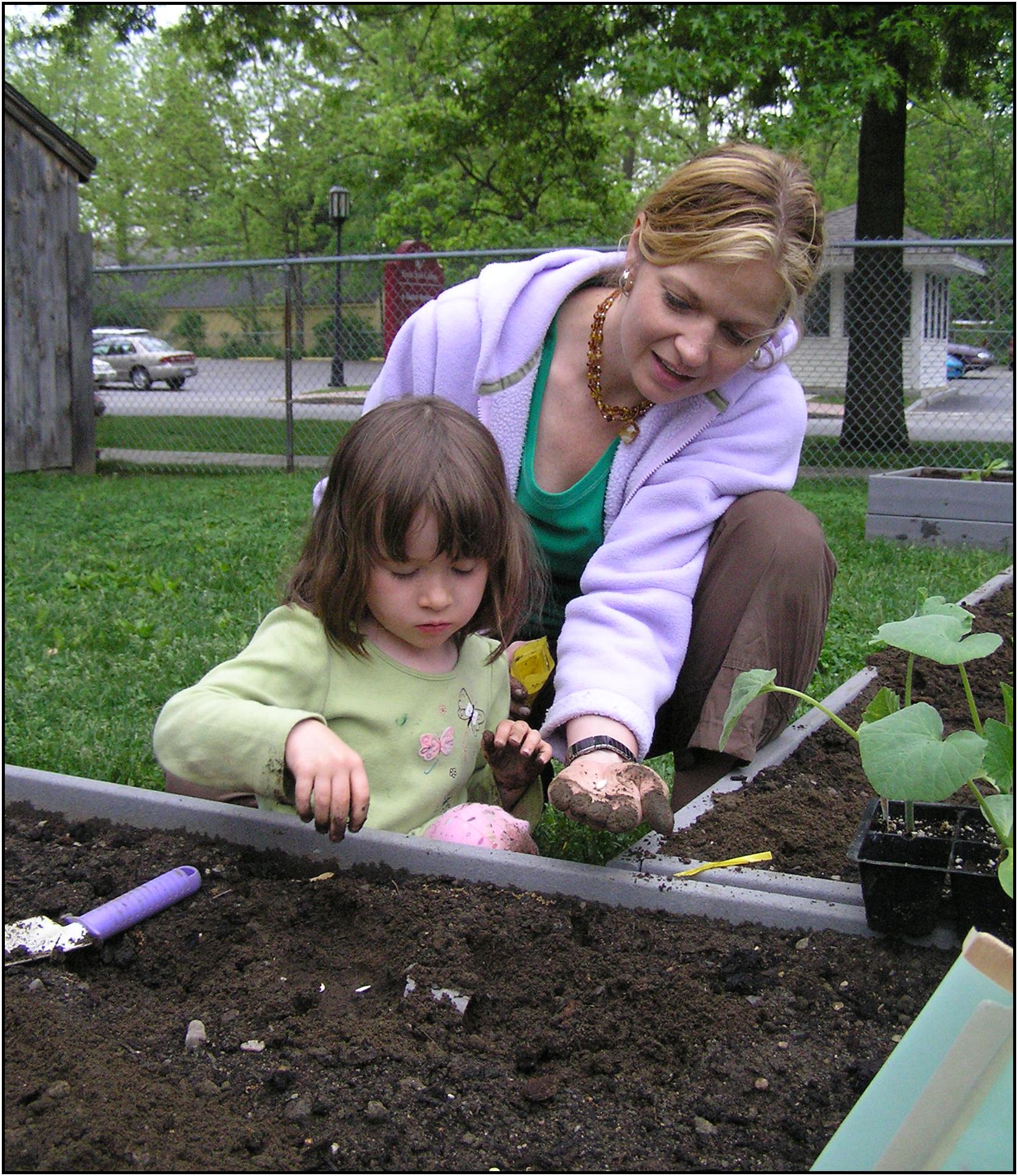
The Early Sprouts Program promotes learning among teachers, preschool-age children and their families using a “seed to table” approach.  Specifically, this program is a research-based nutrition and gardening curriculum that gives children experience in planting, harvesting and preparing their own food.  Holistically, however, it is a community-based model for creating positive change.

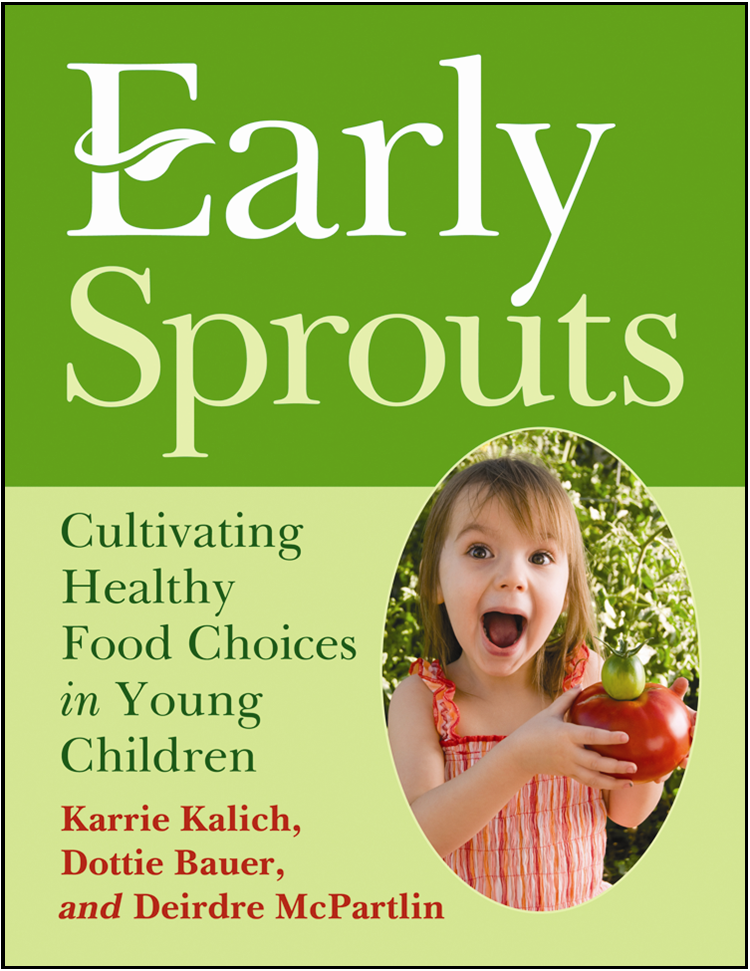
Dr. Karrie Kalich, a registered dietitian and an associate professor at Keene State College (KSC), is the Primary Investigator for the Early Sprouts program. She led the development of this 24-week preschool curriculum and helped write the book, Early Sprouts: Gardening and Nutrition Experiences for the Young Child, used in local child care centers such as the Keene State College Child Development Center (CDC) and five afterschool programs.

The Early Sprouts Program uses raised organic garden beds, sensory experiences, and cooking lessons focused on six target vegetables to:

  • Increase young children’s food preferences for and consumption of fruits, vegetables, whole grains and low fat dairy products.
  • Promote school and family-based dietary changes.
  • Reduce the risks and issues associated with childhood overweight and obesity.

Project Beginnings

The seeds for Early Sprouts were nourished as Karrie worked at Linden Tree Farm & CSA during graduate school.  Her past connections and passion for local food and her interest in promoting behavior change contributed to the program’s development, as did collaborations with KSC students; faculty from the KSC nutrition and education departments; and the Head Start Centers of Southwestern Community Services.

Karrie’s vision came to life thanks to a Home Depot Youth Gardening Grant to build raised bed gardens at the KSC CDC.  Initial funding also came from the MacMillan Company in Keene.

In the Spring of 2006, the Early Sprouts program flourished into eight raised garden beds on the CDC’s playground.

Up and Running

Early Sprouts is now used in many preschools and spans the school year.  Training and support for classroom teachers and family outreach is a component of the program.

In the 2008-09 school year, six Head Start Centers in New Hampshire as well as the Children’s Learning Center at Dartmouth-Hitchcock Keene, Lily Garden Learning Center and the University of New Hampshire Child Study and Development Center used the Early Sprouts program.

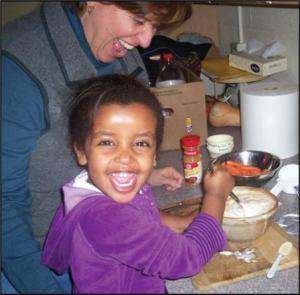
At the start of each week, a vegetable is explored using all the children’s senses. The students prepare a recipe together using the week’s vegetable and at the end of the week, take home a recipe kit to reinforce their learning with their family.

“We send home family recipe kits to extend the experience into the home.  The kits include all of the ingredients needed to prepare the recipe,” Kalich shared.

Families are kept engaged not only through the family recipe kits but with regular newsletter articles from Early Sprouts.  Families are also invited to join their children in planting the garden, participating in class activities, and attending special events such as the “stone soup” luncheon and the butternut squash pancake breakfast.

Initially, Karrie’s favorite part of the program was gardening with the kids. Now that joy has expanded to presenting with classroom teachers at regional, national and international conferences where they have the opportunity to share their Early Sprouts experience and educate their peers.

The Early Sprouts Program is now recognized nationwide as a model community program.  In 2008, the program received the Surgeon General’s “Healthy Youth for a Healthy Future” Champion Award. The Champion Award highlights prevention programs that form partnerships and help kids stay active, adopt healthy eating habits, and promote healthy choices.  In 2009, Kalich was presented with the “Mary Abbott Hess Award for an Innovative Food & Culinary Effort” from the American Dietetic Association.

Hurdles to Overcome

One of the unexpected challenges that Early Sprouts teachers met were school fire codes—cooking was not allowed in some of the classrooms.  For a curriculum that includes cooking in the classroom this is a major hurdle to work through before the program is implemented.

Planning for the Future

The Early Sprouts program is dynamic and continually evolves thanks to teacher feedback. It is expanding beyond the school day to after-school programs in Troy, Gilsum, Winchester, Hinsdale and Westminster, VT  to work with elementary school-aged children.  This is a partnership between Keene State College and the after-school programs and is implemented with current after-school funding.  AmeriCorps Health & Wellness VISTA Members are an integral part of this partnership.

To date, Early Sprouts has offered four trainings at local after-school programs.  After-school programs are proving to be an ideal fit for Early Sprouts—as after-school programs are looking for wellness-based best practice initiatives.  They also have the time to devote to this type of program.

Kalich is hoping to incorporate more cultural diversity into the curriculum and work more with UNH Cooperative Extension. Another important goal is finding a “real” gardener to join the Early Sprouts team.

Advice for Other Schools/Projects

Kalich shares: Have a plan with how to deal with division of roles, training, and maintaining the raised beds.

“It’s easier to teach a behavior than to change one …” — Dr. Susan Lynch Pediatrician and N.H.’s First Lady