Permaculture in NH: Cultivate Community One State at a Time

After these visits I wondered how these individual sites, cultivating community one site at a time, could work and learn together.

Some initial ideas are:

Together we can cultivate community one state at a time. Have other ideas or a permaculture site of your own? Please contact jen(at)hannahgrimes.com.

Permaculture in NH: Greater Seacoast Permaculture Meetup Group

Next, I visited two home sites in the Seacoast Region.  Together Amy Antonucci and Mary Gilbertson organize the Greater Seacoast Permaculture Meetup Group.  Meetup is an online tool that makes it easy for local groups to form and meet around a specific topic.  By connecting individuals, Amy and Mary are building a network of support, skill sharing and community.

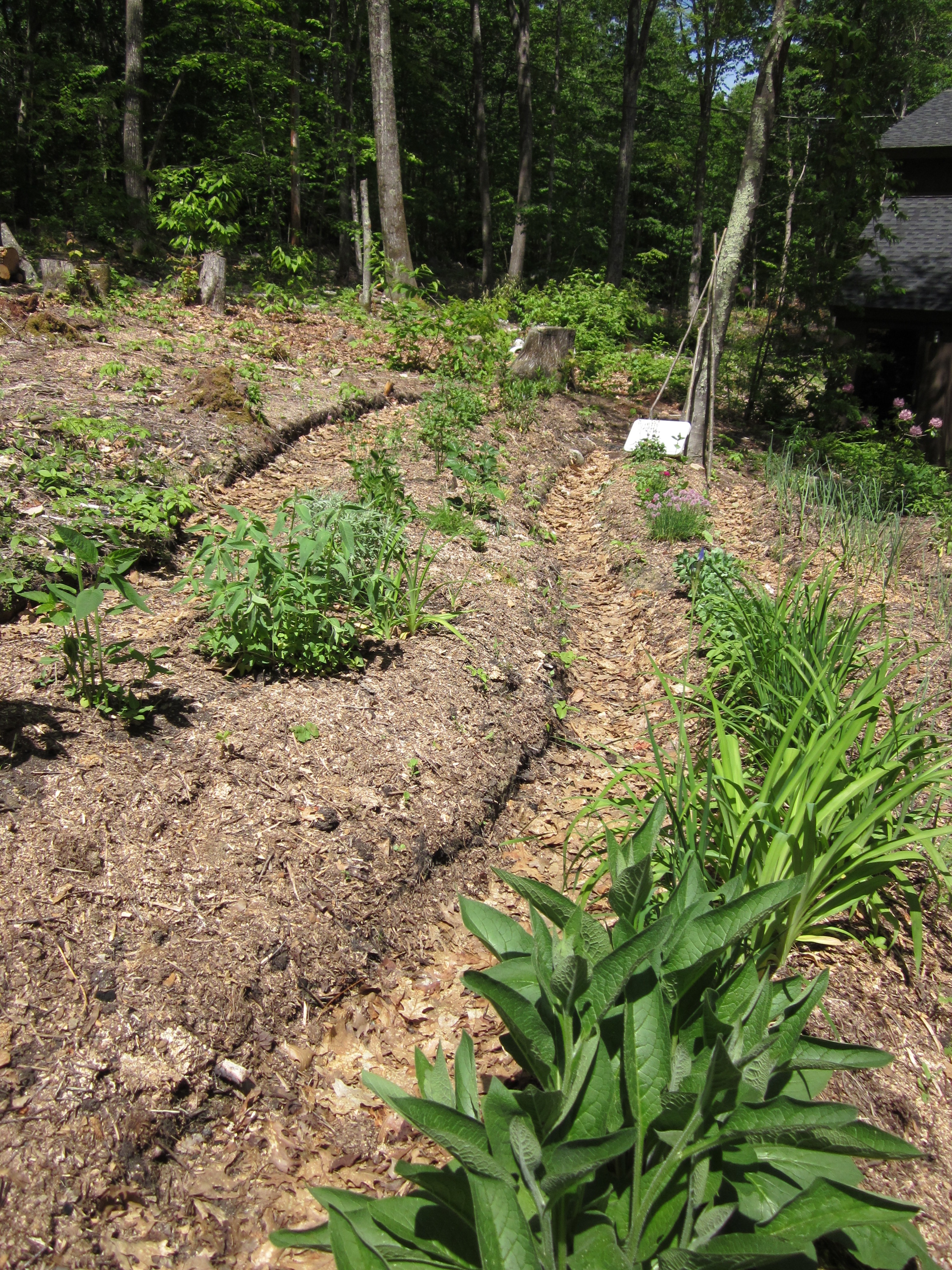
Amy’s site, started in December 2008, is a wooded lot with a steeply sloped side yard.  She’s adapted the site by building terraced garden beds.  Each terrace level holds a swale, or a ditch that follows the contours of the land, that distributes rainwater evenly along each bed and decreases erosion.

Another highlight of her site was an edible plant called the spinach vine (Hablitzia tamnoides). Native to Eurasia’s shady woods and ravines, its leaves can grow to the size of a hand.  When cooked this perennial tastes much like the spinach we’re used to.

Animals are also an important addition to Amy’s permaculture pursuits.  Amy keeps bees in her backyard to yield honey and pollinate her plants – as well as her neighbors.  Since her site is a project in progress, for now she keeps her chickens on a friend’s property.  She has a heritage breed called the Dominique considered to be America’s first chicken breed. They are cold hardy and valued for both their eggs and meat.  Amy is very committed to being a steward of heritage and threatened breeds of farm animals and plans to add Nigerian dwarf goats to her site soon.

When I asked Amy what attracted her to permaculture, she replied, “It just really clicked for me.  We are borrowing from the past while using today’s technology.”

In contrast with Amy’s wooded site, Mary’s year and a half year old site is in a housing development.  It is a perfect place for Mary to spread her permaculture ethics to her neighbors and show how you can bring both beauty and function together.  For example, instead of burning bush, she advocates blueberries for striking fall foliage – and delicious berries too.
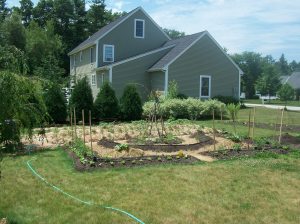

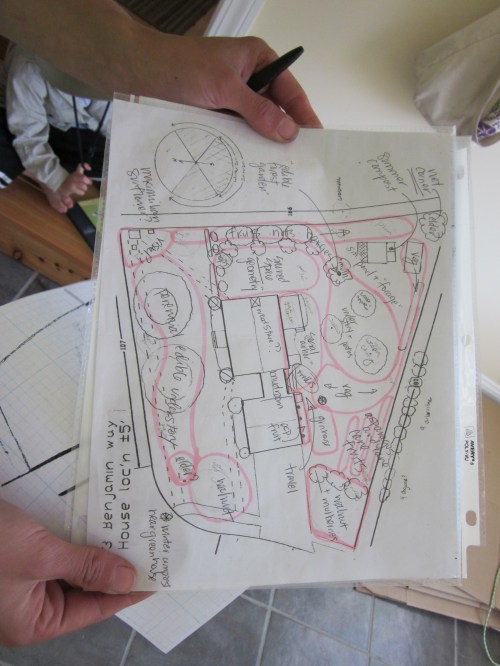
Mary is also helping to make rain barrels and keyhole gardens a common site in her suburban setting.  One of her neighbors is already interested in building a keyhole garden, a circular bed with a path to the center.  Her young son, Ian, shares her passion for permaculture and is quick to point out the different species growing in each circular garden.


It is all about pulling what she practices into everyday life.  “Permaculture is a means to develop life skills and enhancements for sustainable living and beyond,” Mary shares.

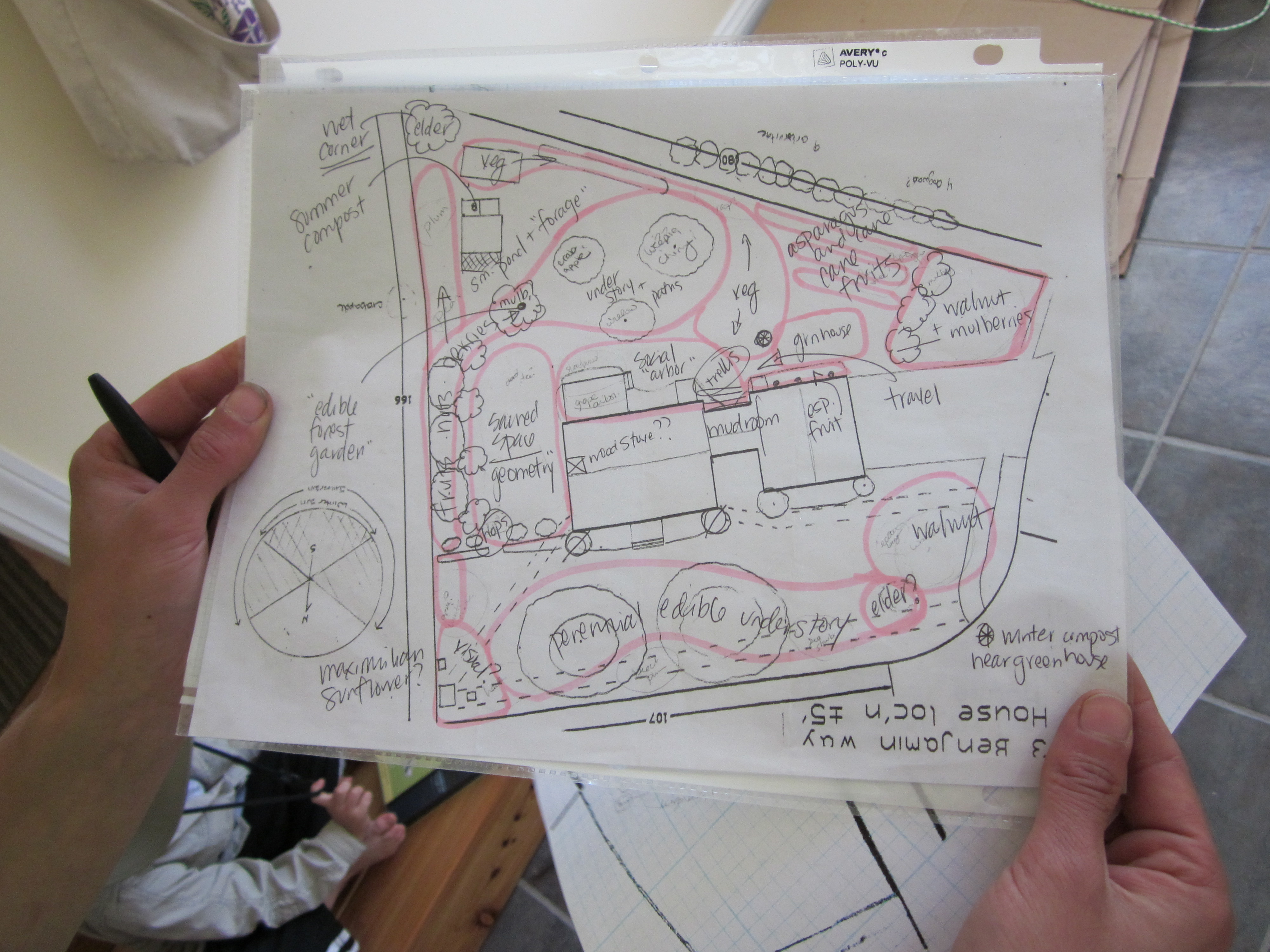
Relative Location: By placing elements so they are best positioned to interact with each other, we can increase benefits and decrease extra labor. Since Amy’s site is wooded, select trees are cut to open up sun pockets.  Some trunks are left standing to use as fence posts for a future goat yard.  A new garden bed will be placed adjacent to the goat yard, where the manure can be more easily transferred from the goat yard to the garden for fertilizer. In Mary’s site, guilds (a number of perennials growing in one area) support the growth of her fruit trees by luring beneficial insects, boosting soil fertility and conserving water.
Ready to visit? Browse their meetup site at http://www.meetup.com/GreaterSeacoastPermaculture and view upcoming events and discussions.

Permaculture in NH: 4-H Children’s Teaching Garden

At the 4-H Children’s Teaching Garden, my site visit was with Julia Steed Mawson, 4-H Extension Educator and Garden Coordinator. This permaculture-based garden began in 1998 and moved to the Massabesic Audubon Center in 2006.  During the growing season, it hosts 150 inner city and neighborhood kids weekly.

Kids plan, grow and harvest their own yardstick-sized gardens, taking some of the harvest home to their families and donating the rest to the New Hampshire Food Bank.  Last year, they donated over 1800 pounds of produce – and this year, Julia states, “Our target is 3,000 pounds.”

The garden is also used to demonstrate to families what they can do in their own backyards.  For example, each garden bed is created using sheet mulch (layers of cardboard, newspaper and other materials to kill weeds and prepare the bed for planting) – an effective and easy way to establish a garden bed.  Some beds are places for children to carry out mini-research projects, testing out the effects of different mulches, cover crops or composting methods on plant growth and yield – showcasing which techniques may bear the most fruit in others backyards.  Also, there is an extensive plan for an edible forest garden that will further introduce youth, elders and their families to the principles of permaculture.  “Every garden should be a teaching garden,” Julia shares.

Multiple functions: By considering and valuing all functions of an element, we produce more uses and subsequent yields. Daylilies are used as edging for each garden bed and acts as a teaching tool.  The daylilies have large flowers that are easy for children to dissect and explore the different parts of a flower. Reclaimed carpet squares are used as walkways in the gardens, so children are sure where to step.  The squares are also used by kids to help them design their garden beds.

To Julia, the Children’s Teaching Garden is more than a place to plant seeds and seedlings – above all, it is a place to plant the seeds of non-violence, entrepreneurship, and healthy living.

Ready to visit? Connect with the 4-H Teaching Garden on Facebook or contact Julia Steed Mawson at 603-660-6373. The garden is cosponsored by UNH Cooperative Extension and the Massabesic Aububon Center.

Permaculture in NH: D Acres

My first visit was to D Acres, an education center and demonstration site for sustainable living and small-scale agriculture founded by Josh Trought and others in 1997.  The principles of permaculture permeate throughout the site – in the design & layout, integration of animals, and organic & no-till practices used.

It is vital at D Acres to both educate about and practice permaculture. Josh shared that many permaculture practices, designed and applied in Australia, may not translate well to our short New England growing season.  D Acres provides opportunities to experiment on a large scale and to share what works in our climate.  “If we can figure it out here, we can figure it out everywhere,” Josh states.

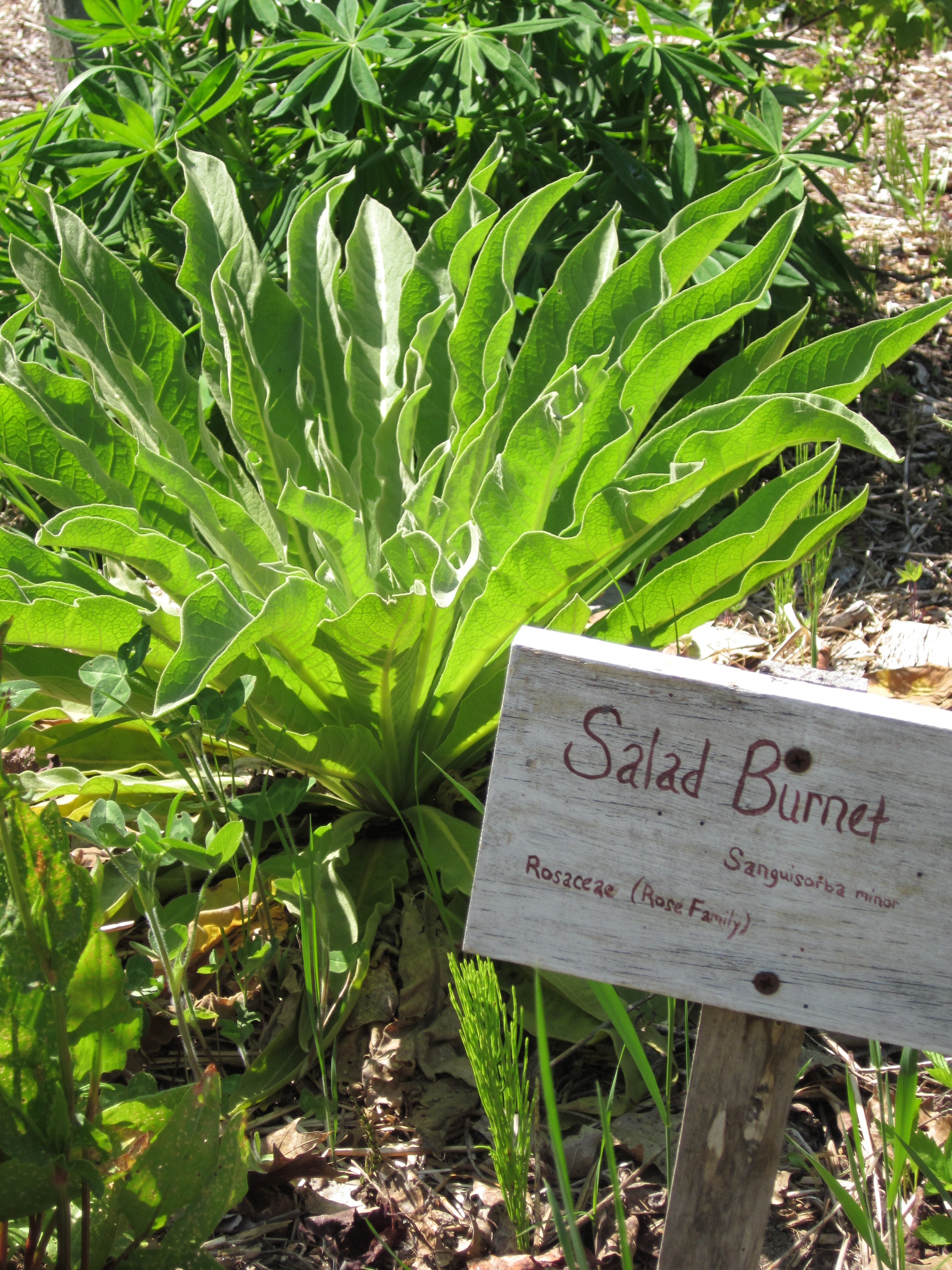
Regina Rinaldo, the Kitchen Manager and Fiber Arts Coordinator, led me around the site, highlighting some of the 100+ perennial species and permaculture principles at D Arces:

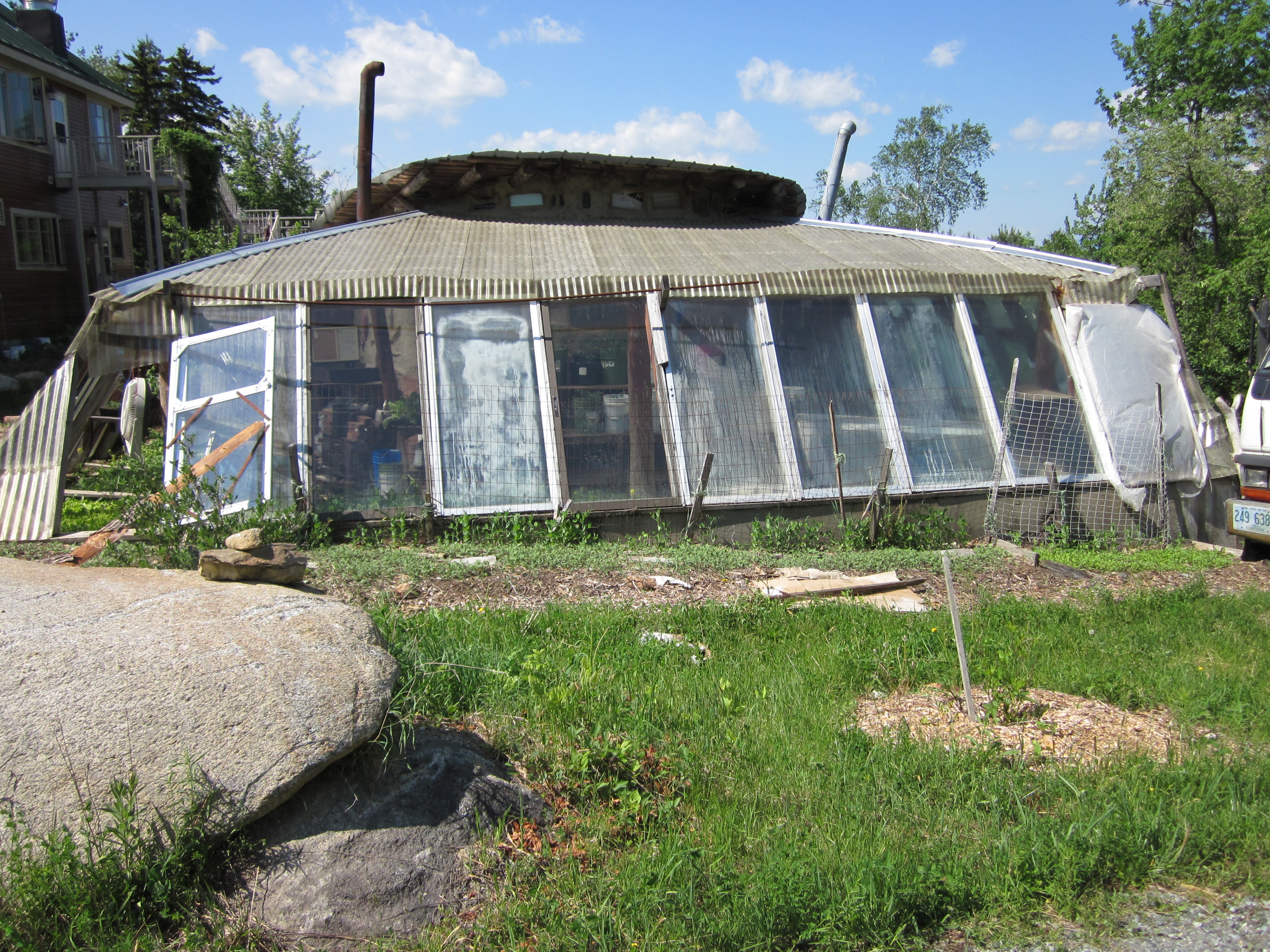
Produce No Waste: By valuing and making use of all the resources available to us, nothing goes to waste. There were countless examples of this principle at work, but the example I first noticed was the greenhouse enclosed in salvaged glass doors.

Catch and Store Energy: By developing systems that collect resources when they are abundant, we can use them in times of need. To catch and store water, D Aces is building a system of ponds and terraced waterways to catch any rainwater and transfer down slope when it is needed.  There are also rain catchment systems on many of the roofs with ground gutters to carry the water to nearby gardens.

Ready to Visit? D Acres (http://www.dacres.org) offers many community events and an on-site hostel.  A course called Permaculture Through the Seasons is offered over seven weekends from May to November.

When I asked Josh to share his favorite part of the site, his reply reflected D Acres and the holistic nature of permaculture perfectly.  What was his favorite part of D Acres? He answered, “Everything.”